
Reframing Separation
Siempre Ahí: Rethinking Presence Across Borders
Por Dra. Cheryl Aguilar · 12 de agosto de 2026
Esta entrada solo está disponible en inglés.
I will never forget an interview with a mother we named Lucia in the study. When I asked her to share her experience of separation from her child, she immediately stopped me and said:
“I was always there.”
Her words stayed with me.
Lucia’s response illuminated a tension that I would later encounter throughout my dissertation: the way we have traditionally framed immigration-related family separation does not always reflect how parents themselves experience or understand it.
In migration research, we often describe families who migrate at different times as experiencing separation or staged migration. These terms accurately describe a physical reality—parents and children may live in different countries, sometimes for years. But when we listen closely to parents, physical separation does not necessarily mean that they experience themselves as absent from their children’s lives.
For Lucia, she had never stopped being there.
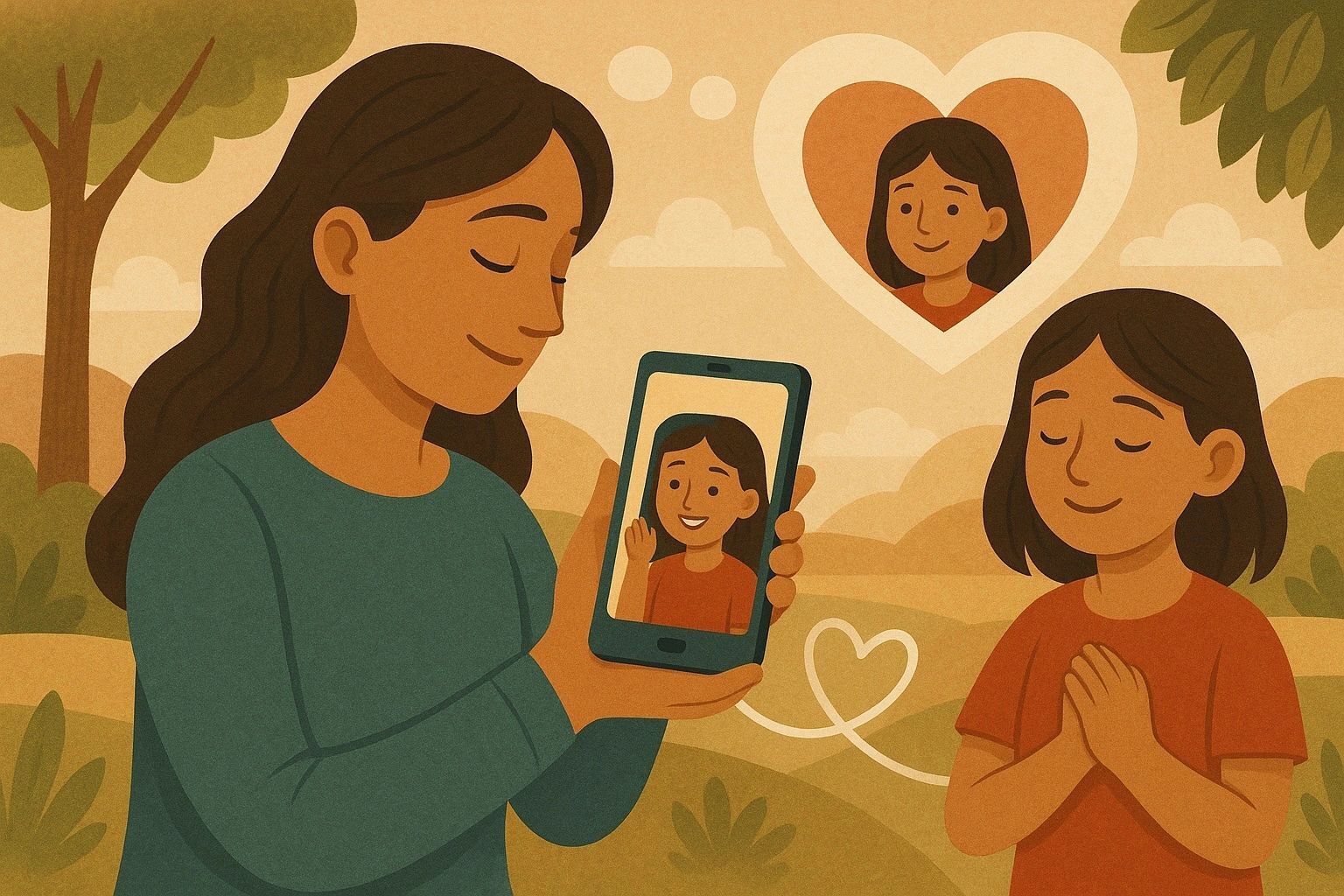
As I continued analyzing parents’ stories, I heard versions of this experience again and again. Parents described remaining deeply involved in their children’s lives across borders. Through phone calls and video conversations, they helped with homework, shared everyday moments, talked before bedtime, celebrated birthdays and milestones, offered guidance, made decisions, worried, listened, and remained emotionally available.
They were physically apart, but not necessarily disconnected.
Their stories also point to something that extends beyond virtual communication: a kind of psychic connection between parent and child. Even when they could not occupy the same physical space, parents continued to hold their children in mind, experience themselves as responsible for their well-being, and remain psychologically and emotionally invested in their everyday lives.
This does not minimize the profound consequences of physical separation. Parents in the study described grief, anxiety, loneliness, traumatic stress, and significant emotional distress. Rather, their experiences ask us to hold two realities at once: parents and children can experience the tremendous pain of physical separation while also maintaining meaningful emotional, relational, and psychic connection.
That distinction matters.
When we describe immigrant families only through the language of separation, we risk overlooking the many ways parents continue parenting across borders. We may also impose a meaning on their migration experiences that does not fully resonate with how they understand themselves, their relationships, or their roles as parents.
Lucia’s words—“I was always there”—eventually became the inspiration for Siempre Ahí: Always There.
For me, Siempre Ahí captures one of the most important lessons parents taught me through this research: presence is not defined solely by physical proximity. Presence can also live in emotional availability, consistency, communication, responsibility, remembrance, and the intentional ways parents continue showing up for their children across borders.
And that connection may matter when families reunify. Reunification restores physical proximity, but it does not erase what parents and children experienced while living apart. Families may still need to rebuild relationships, adjust to one another, navigate changes in parental roles, and heal from the emotional consequences of separation.
Perhaps, then, we need to ask not only “How long were you separated?” but also:
“How did you remain present in one another’s lives while you were physically apart?”
That question creates space for a different story—one that recognizes both the pain of physical separation and the enduring connections parents work so hard to sustain.
That is the story at the heart of Siempre Ahí.